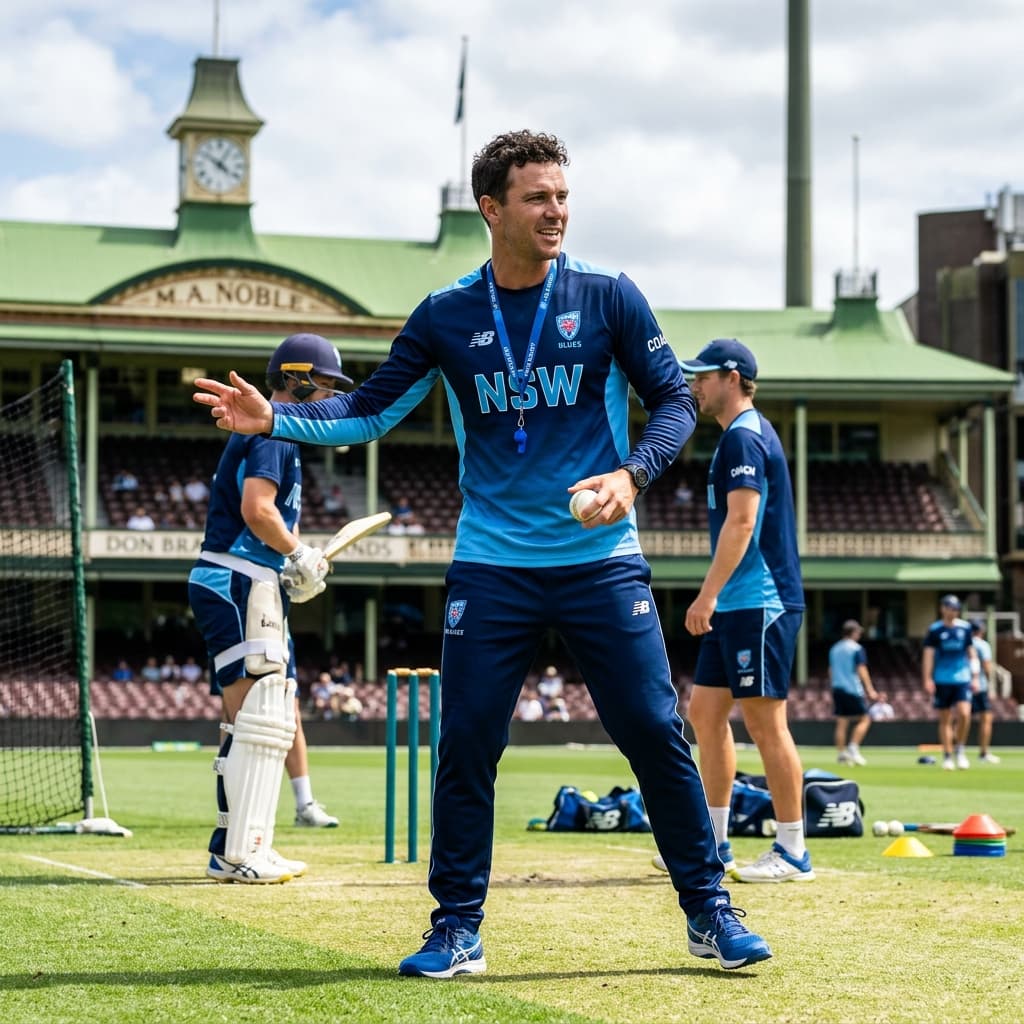
Sydney, September 2026: Former Australia fast bowler Peter Siddle has taken on a new challenge in Australian cricket after joining New South Wales as the state's bowling coach. The appointment brings one of Australia's most experienced Test bowlers into a coaching role and gives the state's emerging fast-bowling group an opportunity to learn from a player renowned for his competitiveness, discipline and longevity.
Siddle's transition into coaching comes after a playing career that spanned more than a decade at the highest level. Known for his relentless work ethic and ability to bowl long spells, the Victorian fast bowler represented Australia in all three international formats and became one of the country's most respected players of his generation.
His move to New South Wales represents another step in a coaching career that could eventually see him become a significant figure in Australian domestic cricket.
From Test Bowler to Coach
Siddle established himself as an international cricketer through his ability to consistently generate pressure. He made his Test debut for Australia in 2008 and quickly became an important member of the country's pace attack.
One of his most memorable achievements came during the 2010-11 Ashes series, when he claimed a hat-trick at the Gabba on his birthday.
While injuries and competition for places affected his international career, Siddle continued to demonstrate remarkable longevity. He eventually finished with more than 200 Test wickets, placing him among Australia's notable fast bowlers of the modern era.
His experience will now be transferred from the field to the coaching environment.
For New South Wales, the appointment is particularly valuable because domestic cricket remains one of the most important pathways into Australia's professional and international teams.
Why Siddle's Experience Matters
Fast bowling is an area where technical knowledge and practical experience can make a major difference.
Young bowlers must learn how to manage workloads, maintain pace across long spells, create movement and adapt their tactics according to pitch and opposition.
Siddle experienced all of those challenges during his career.
He was not always the fastest bowler in the attack, but his effectiveness came from accuracy, movement, stamina and an aggressive approach. Those characteristics could make him a particularly useful mentor for young New South Wales bowlers.
His understanding of Test cricket is also likely to be valuable. Unlike short-format bowling, red-ball cricket demands patience and the ability to construct pressure over extended periods.
Siddle's career was built around exactly those qualities.
New South Wales Looking to Develop Fast Bowlers
New South Wales has historically played an important role in Australian cricket development.
The state has produced numerous international players and remains a key pathway for cricketers hoping to progress through domestic cricket into the national setup.
The arrival of Siddle adds another experienced voice to that development system.
For younger bowlers, having access to someone who understands the demands of international cricket can provide insight that goes beyond technical coaching.
Siddle can help players understand how to prepare for long spells, manage fatigue, study batters and respond when conditions do not favour fast bowling.
Those lessons are particularly important in Australian domestic cricket, where players are often competing for limited opportunities.
The Modern Fast Bowler's Challenge
The role of a fast bowler has changed considerably since Siddle made his international debut.
Modern cricket places greater demands on pace bowlers because of the increasing number of matches across formats. Players must adapt between Tests, one-day cricket and T20 competitions while maintaining fitness.
Workload management has therefore become a central part of fast-bowling development.
Siddle's experience across different periods of Australian cricket could help young players understand how to manage that transition.
He also brings knowledge of the mental side of the game.
Fast bowling can be physically demanding and mentally exhausting. A bowler can deliver several overs without taking a wicket while still being expected to maintain intensity.
Siddle became known for embracing that challenge rather than becoming frustrated by it.
A Different Perspective for Young Players
One of the potential advantages of appointing former international players as coaches is their ability to explain situations that cannot always be learned from statistics.
A young bowler may understand how to bowl a particular delivery but still struggle to decide when to use it.
Someone with international experience can help bridge that gap.
Siddle's career involved facing some of the world's best batters in high-pressure Test matches. His experiences against England, South Africa, India and other major teams could provide useful examples for players beginning their own professional careers.
His coaching philosophy will therefore be closely watched as he begins his role with New South Wales.
Australian Cricket Continues Investing in Coaching
Siddle's appointment is also part of a wider trend in Australian cricket, where former international players are increasingly moving into coaching and development roles.
Former players bring an understanding of modern professional cricket while also possessing direct knowledge of the pressures faced by elite athletes.
For domestic teams, these appointments can create a stronger connection between grassroots development and international cricket.
The ultimate goal is to produce players capable of progressing through the system and performing at higher levels.
What to Expect From New South Wales
The immediate focus will be on helping New South Wales' bowling group become more consistent.
Fast bowlers will need to develop the ability to take wickets while also controlling scoring rates. In longer formats, they will have to learn how to build pressure across multiple spells.
Siddle's influence could be particularly noticeable in those areas.
It will take time to judge the success of any coaching appointment, but his playing record gives him a strong foundation.
His reputation for preparation and competitiveness could also influence the team's wider culture.
The Next Chapter
Peter Siddle's move into coaching marks the beginning of a new stage in a career that has already covered international cricket, domestic cricket and years of professional experience.
For New South Wales, his arrival offers access to a coach who understands fast bowling from the inside.
For the state's young bowlers, it represents an opportunity to learn from someone who spent years competing against the world's best.
Australian cricket has always placed considerable value on fast bowling, and the development of the next generation will remain crucial to the country's international ambitions.
Siddle may no longer be running in to bowl the decisive over himself, but his next contribution to Australian cricket could be just as important — helping the next generation learn how to do it.